In the American scientific journal Journal of Geographic Information System, which has been published for 18 years, a new scientific paper by Dr. Sam Osmanagich—principal investigator of the Bosnian Valley of the Pyramids project—was published in Issue 18 (2) on March 17, 2026.
This marks his 43rd scientific paper in the past two years, confirming the continuity of one of the most intensive research efforts in Europe. (www.drsamosmanagich.com)
GEOMETRY THAT CHALLENGES THE NARRATIVE
The study analyzes spatial relationships between key sites in Visoko, Bosnia and Herzegovina:
- Bosnian Pyramid of the Sun
- Bosnian Pyramid of the Moon
- Bosnian Pyramid of the Dragon
- Pyramid of Love
- Vratnica Tumulus
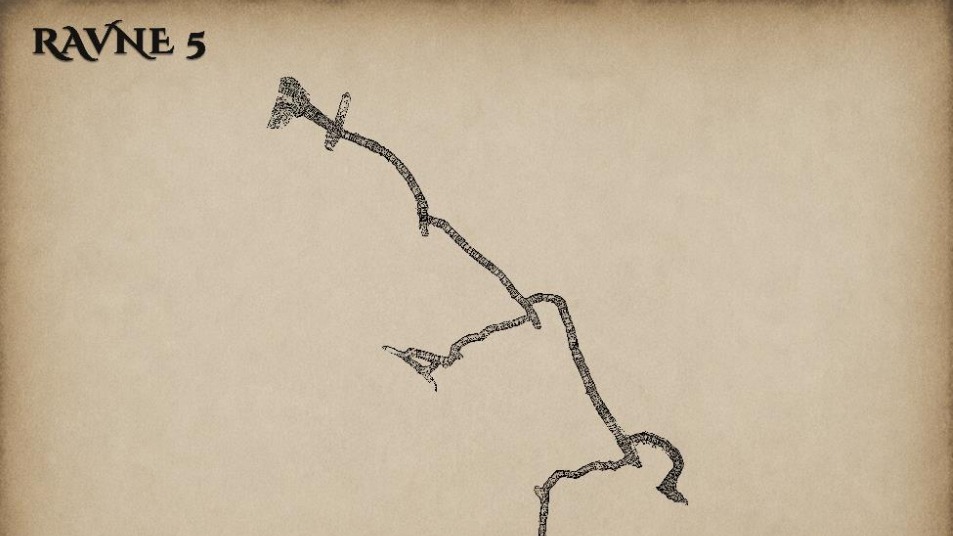
- Entrance to the Ravne tunnel complex
- Surrounding prominent peaks (Četnica, Krtnice, Bedem)
The results indicate that their arrangement follows a logarithmic (Fibonacci) spiral — one of the most fundamental mathematical patterns found in nature.
SCIENCE INSTEAD OF ASSUMPTIONS
Unlike earlier interpretations, this study applies rigorous scientific methods:
- Monte Carlo simulations (up to 100,000 iterations)
- High-precision GIS analysis based on LiDAR data
- Spatial null models (testing randomness)
- Exhaustive evaluation of all possible point combinations (252 configurations)
- Robustness testing (rotation, parameter variation, point removal, noise analysis)
Each of these tests had one goal:
to attempt to prove that the observed pattern is random.
A RESULT THAT DRAWS ATTENTION
The outcome is clear:
- No random model
- No alternative geometry
- No tested configuration
was able to reproduce the same pattern under identical conditions.
In other words:
the applied scientific methods systematically reject randomness as an explanation.
WHAT THIS MEANS
This study does not claim who built these structures or when.
But it raises a fundamental question:
If the arrangement is not random, what shaped it?
It shifts the discussion about the Bosnian pyramids from speculation to measurable, testable patterns.
BROADER SIGNIFICANCE
The methodology developed in this study has global applications:
- archaeological sites
- natural formations
- urban spatial structures
opening a new chapter in the scientific analysis of space and geometry.
ABOUT THE JOURNAL
Journal of Geographic Information System (JGIS) is an international peer-reviewed journal dedicated to the latest advancements in geographic information systems. Its mission is to document state-of-the-art research and promote scientific progress in rapidly evolving fields that connect space, technology, and data analysis. The journal publishes high-quality original research across a broad range of disciplines, including cartography and geodesy, spatial analysis, remote sensing, spatial data processing, and advanced computational models for understanding complex geographic patterns.
FULL PAPER
The full scientific article is available at:
https://www.scirp.org/journal/paperinformation?paperid=150188
FINAL MESSAGE
If a pattern cannot be reproduced by chance — we are no longer dealing with coincidence, but with a system.
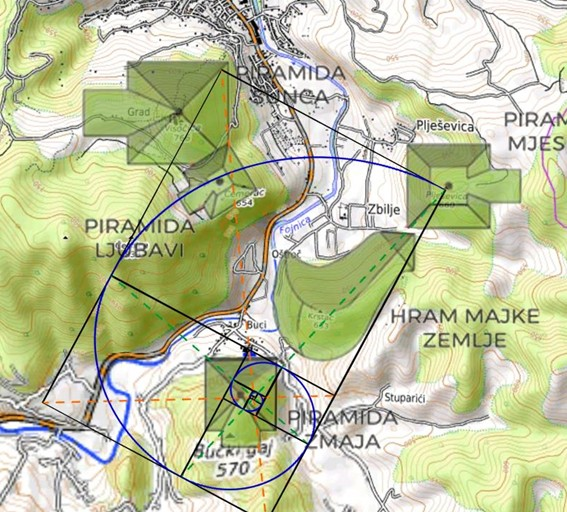
Among the 11 identified Fibonacci spirals in the Bosnian Valley of the Pyramids, one clearly connects:
- the summit of the Bosnian Pyramid of the Dragon
- the peak of Četnica hill
- the Pyramid of Love
- and the Bosnian Pyramid of the Moon