An international peer-reviewed scientific journal has published a new research article authored by Dr. Sam Osmanagich, Principal Investigator of the Bosnian Pyramid project, together with field archaeologist Ajla Šabanija-Softić, who led daily excavations on site.
The paper appears in Archaeological Discovery (Vol. 14, No. 2, 2026) and presents the first controlled archaeological excavation of the Ravne 6 tunnel in Visoko, Bosnia and Herzegovina.
Read the published article: DOI 10.4236/ad.2026.142009
What was discovered?
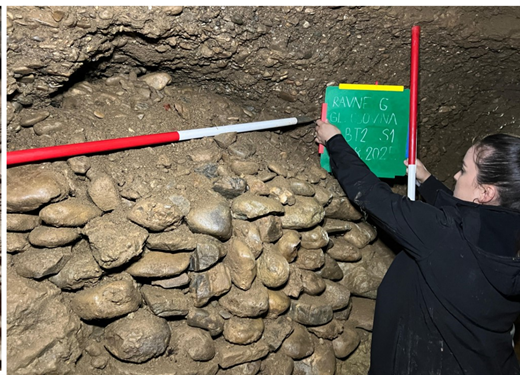
The 2025 excavation opened and documented a previously inaccessible section of the Ravne underground network:
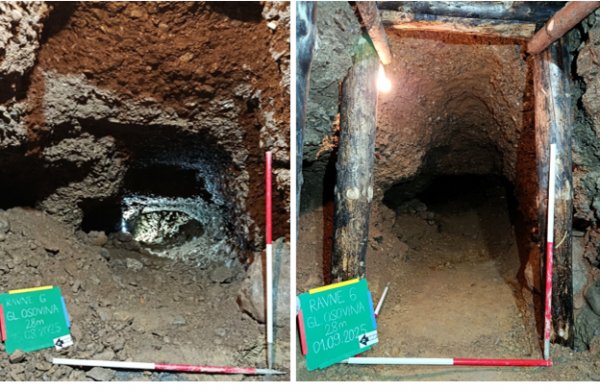
- 125 meters of tunnels are now accessible
- ~60 meters newly cleared in 2025
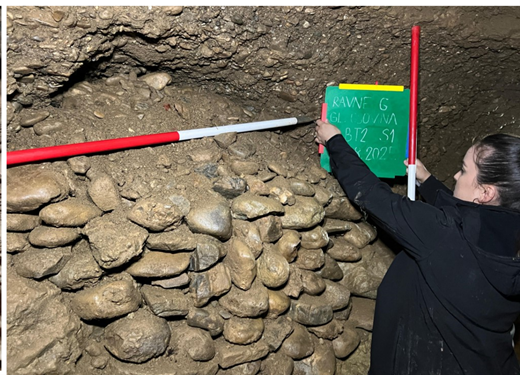
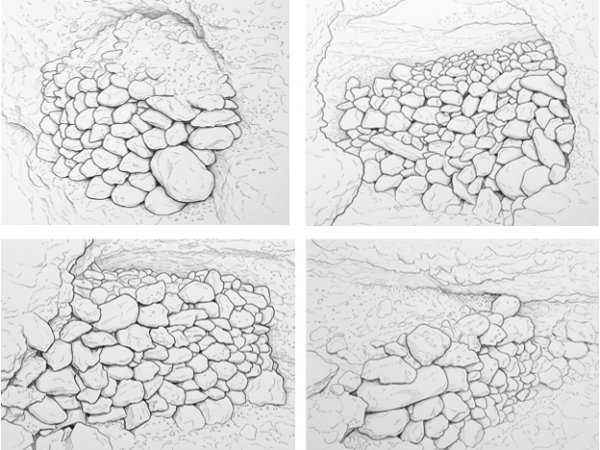
- Dry-stone structures extending ~5 meters
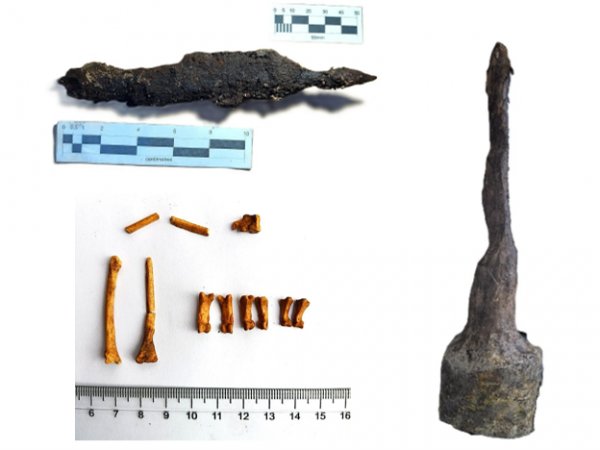
- Wooden artifacts recovered in original position
- Faunal remains (NISP = 11) documented
- Full geodetic survey and stratigraphic control
All work was conducted under official permits and in accordance with standard archaeological methodology.
What dating actually tells us
Three wooden samples were dated using AMS radiocarbon analysis:
- 415 ± 29 BP • 433 ± 28 BP
- 402 ± 29 BP
These calibrate to the late 15th – early 16th century CE
Key interpretation:
These results indicate that the last phase when this section of the tunnel—within ~100 meters from the entrance—was open and accessible dates to the late 1400s / early 1500s.
After that period:
- The tunnels became sealed by accumulated material
- Soil, clay, and vegetation layers formed above the entrances
- Access to these sections was lost for centuries
The excavation revealed a clear internal structure:
- Stable conglomerate walls and ceilings
- A compacted clay floor layer (>1 m thick)
- Intentional sealing deposits (backfill)
- Constructed stone dry-wall features
The geometry, continuity, and internal organization of the passages indicate that the Ravne tunnels are not random natural voids, but an engineered underground system.
Why this matters
This study provides something that has been missing until now:
- Controlled excavation
- Documented stratigraphy
- Physical artifacts in context
- Laboratory-confirmed dates
It establishes a firm chronological anchor for one phase of the activity and clarifies when and how parts of the tunnel system became inaccessible.
Field leadership
- Ajla Šabanija-Softić (MA Archaeology) – excavation director
- Dr. Sam Osmanagich – research design and interpretation
Bottom line
For centuries, these tunnels were hidden.
Now we know:
- They were accessible in the late medieval period
- They were later sealed and buried
- Their structure reflects deliberate engineering, not chance formation
Read the full study
Available here: https://www.scirp.org/journal/paperinformation?paperid=150660
Gallery